

The Ultimate Quit Smoking Playbook: Actionable Templates for a Smoke-Free Life
Quitting smoking is rarely a linear journey. For most, it is a complex psychological and physiological transition that requires more than just willpower; it requires a systematic strategy. At QUITGO, we understand that the hardest part of quitting isn't just the nicotine withdrawal—it is the loss of the ritual. This playbook provides you with structured templates to navigate the cessation process, leveraging our expertise in oral fixation and behavioral replacement.
Why Most Quit Attempts Fail (And How to Fix It)
Statistics show that roughly 70% of smokers want to quit, but only a small fraction succeed on their first attempt. The failure often stems from a 'Cold Turkey' mentality that ignores the cognitive behavioral aspects of smoking. Smoking is a three-fold addiction: chemical (nicotine), behavioral (the routine), and oral (the hand-to-mouth habit). Most cessation aids only address the chemical side. Our playbook addresses all three.
Template 1: The Trigger Audit
Before you toss your last pack, you must understand your 'Smoking Map.' Use this template for three days while you are still smoking to identify the patterns you need to break.
| Time of Day | Activity | Emotional State | Craving Intensity (1-10) |
|---|---|---|---|
| 8:00 AM | Drinking Coffee | Focused/Anxious | 9 |
| 1:00 PM | Post-Lunch Break | Relieved | 7 |
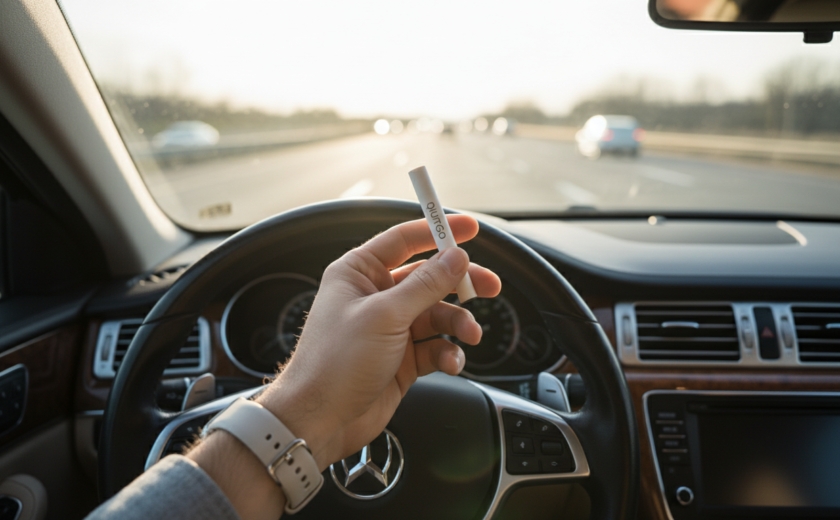
| 6:00 PM | Driving Home | Stressed | 8 |
Action Step: Look for the '9s' and '10s.' These are your high-risk moments. These are the times when you will need a physical substitute, like a QUITGO oxygen inhaler, to satisfy the oral urge without the toxins.
Phase 2: The Substitution Protocol
One of the most overlooked aspects of smoking cessation is the 'Hand-to-Mouth' habit. When you stop smoking, your brain still expects the physical sensation of holding and puffing on a cigarette. If you don't replace this ritual, the psychological tension increases.
The Replacement Matrix
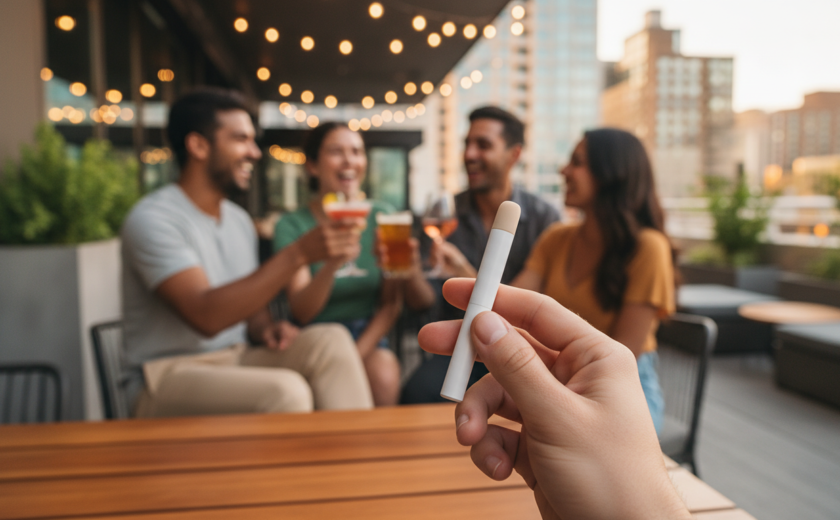
- Social Triggers: Use a QUITGO soft-tip inhaler. It mimics the tactile feel of a cigarette, allowing you to stay in social circles without feeling 'empty-handed.'
- Stress Triggers: Implement 'Box Breathing' while using your inhaler. Inhale for 4 seconds, hold for 4, exhale for 4, and hold for 4.
- Boredom Triggers: Shift your environment. If you usually smoke in the garage, avoid the garage for the first 72 hours of your quit date.
Template 3: The 5-Minute Craving Block
Cravings are intense, but they are temporary. Most cravings last between 3 to 5 minutes. The goal is to survive those 300 seconds. Use this script when the urge hits:
- Delay (0-60s): Acknowledge the craving. Say out loud: 'I am experiencing a craving. It will pass.'
- Distract (60-120s): Engage in a rapid physical task. Wash the dishes, do ten jumping jacks, or scroll through a non-triggering app.
- Drink Water (120-180s): Sip ice-cold water slowly. The cold sensation shocks the nervous system slightly, redirecting focus.
- Deep Breathe (180-240s): Use your QUITGO inhaler to take five deep, diaphragmatic breaths. This mimics the inhalation pattern of smoking and calms the vagus nerve.
- Discuss (240-300s): Text a support person or check your 'Why' list.
Template 4: The Relapse Recovery Roadmap
If you 'slip' and have a cigarette, the biggest danger is the 'What the Hell' effect—the idea that because you failed once, the whole day or week is ruined. This template ensures a slip doesn't become a relapse.
- Immediate Action: Stop immediately. Do not finish the cigarette or the pack.
- Analyze the Breach: What was the trigger? (e.g., 'I had a drink with a friend who smokes.')
- Adjust the Plan: 'Next time I see this friend, I will bring my QUITGO inhaler and order a non-alcoholic beverage first.'
- Forgiveness: Guilt is a trigger for more smoking. Acknowledge the slip and move on.
The Role of Non-Nicotine Aids
Many users find that NRT (Nicotine Replacement Therapy) like patches or gum helps with the physical tremors, but they still feel 'fidgety.' This is where our non-nicotine oxygen inhalers become essential. They provide a safe, drug-free way to satisfy the behavioral component of smoking. By decoupling the act of 'puffing' from the intake of nicotine, you can slowly deconstruct the habit without the intense psychological distress of total deprivation.
Long-term Maintenance: The 21/90 Rule
It takes 21 days to break a habit and 90 days to create a lifestyle.
- Days 1-21: Focus on survival and replacement. Use your templates daily. Carry your QUITGO tools everywhere.
- Days 22-90: Focus on identity. Start referring to yourself as a 'non-smoker' rather than 'someone who is quitting.'
- Day 90+: Vigilance. Be aware of 'nostalgia triggers' (old vacation spots or certain seasonal changes) where the urge might resurface.
Conclusion
Quitting smoking is a masterclass in self-discipline, but you don't have to do it alone or without tools. By using these templates—The Trigger Audit, The Substitution Protocol, and the Craving Block—you transform a vague goal into a concrete mission. QUITGO is here to support the physical and behavioral gaps, ensuring your hands and mouth are occupied while your body heals.