

For many vapers, the first 30 minutes of the day are the hardest. Your body has spent the night in a state of mild withdrawal, and the ‘morning hit’ has become a deeply ingrained physiological anchor. If your goal is to quit vaping, reprogramming this specific window of time is critical for long-term success. By replacing that toxic first drag with a clean air strategy, you can satisfy the oral fixation while prioritizing better breath and lung recovery.
The Morning Trap: Why AM Cravings Are So Intense
Waking up triggers a spike in cortisol, known as the ‘Cortisol Awakening Response,’ which naturally alerts the brain. For nicotine users, this alertness is hijacked by a dopamine deficit, creating an urgent demand for a stimulant. However, this is also when your lungs are clearing out mucus from the night, often resulting in coughing or tightness.
Fact: Clinical studies suggest that the average intense craving episode lasts only 3 to 5 minutes. If you can bridge this short gap with a sensory replacement, the urge will subside, allowing you to start your day without breaking your streak.
Case Study: Sarah’s Nightstand Strategy
Sarah, a 28-year-old graphic designer, struggled with ‘morning fog’ and chest tightness. Her vape was always the first thing she touched—often before her feet hit the floor. The result was an immediate spike in heart rate and shallow breathing.
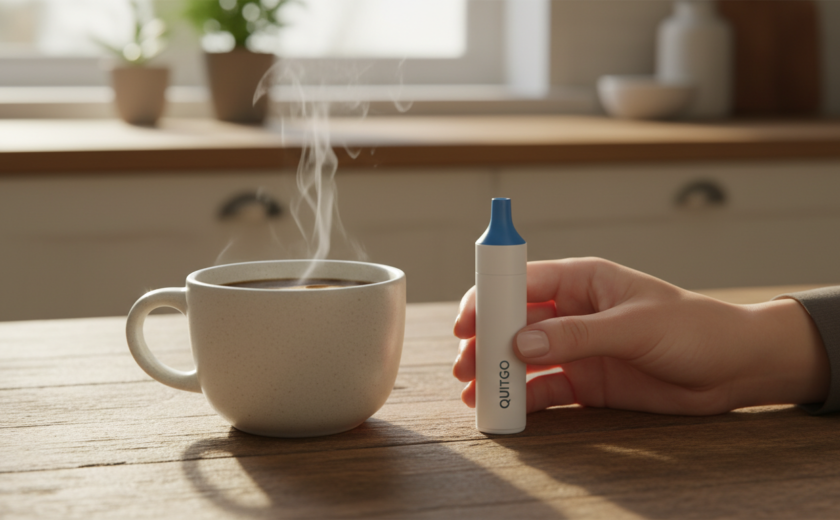
To break the cycle, Sarah utilized a simple Habit Replacement technique. She removed all vape devices from her bedroom and placed a QuitGo Oxygen Inhaler on her nightstand. Upon waking, instead of inhaling vapor, she took deep, drag-like pulls from the non-electric inhaler. This satisfied the hand-to-mouth ritual and provided the throat sensation she craved, but filled her lungs with fresh air instead of chemicals. Within two weeks, her morning cough subsided, and her lung capacity for morning runs improved significantly.
How the Oxygen Inhaler Aids Lung Recovery
Sensory Replacement Therapy
The QuitGo Oxygen Inhaler is designed to mimic the tactile sensation of vaping. It offers draw resistance (a critical component of the habit) without delivering nicotine or heat. This is essential for those seeking better breath because it prevents the thermal irritation that causes airway constriction.
Deep Breathing vs. Vaping
Replacing the vape with a clean air inhaler transforms a destructive habit into a meditative one. Deep, diaphragmatic breathing through the inhaler can help lower morning cortisol levels naturally, reducing the anxiety that often triggers the urge to smoke or vape.
Ready to clear your lungs?
Use the QuitGo Oxygen Inhaler to simulate the drag sensation and overcome the morning urge to vape.
Step-by-Step Morning Routine to Stop Vaping
- Sanitize the Environment: Remove vapes from the bedroom. If it’s not within reach, the automatic behavior is interrupted.
- The Replacement Anchor: Place your nicotine-free inhaler exactly where your vape used to be.
- Hydration First: Drink a full glass of water immediately after your ‘inhaler session’ to wash away ‘keto breath’ or dry mouth associated with detox.
- Physical Distraction: Engage in 5 minutes of stretching or CBT (Cognitive Behavioral Therapy) mindfulness to ride out the initial craving wave.
By mastering the first hour of your day, you set the tone for a smoke-free life. Focus on the sensation of expanding your lungs fully without the restriction of vapor, and lean on sensory aids to navigate the withdrawal peaks.
Disclaimer: QuitGo products are non-electric, non-addictive, and nicotine-free accessories designed to help with behavioral modification. These statements have not been evaluated by the FDA. This product is not intended to diagnose, treat, cure, or prevent any disease. Always consult a healthcare professional before starting a new cessation program.