

For many ex-smokers and vapers, the car is a sanctuary of stress relief—or a torture chamber of cravings. The association between driving and inhaling vapor is a powerful behavioral trigger. Known as “auto-pilot” smoking, your brain links the act of turning the ignition or hitting a red light with a dopamine spike delivered by nicotine. If you are trying to quit vaping, the daily commute can be the hardest hurdle.
Why Driving Triggers Vaping Urges
Driving engages the hands and eyes but leaves the mouth and “background brain” idle. This creates a vacuum often filled by the oral fixation of vaping. Unlike sitting at a desk, you cannot simply walk away from the situation when a craving hits on the highway.
Oxygen Inhaler vs. Vaping: The Safe Switch
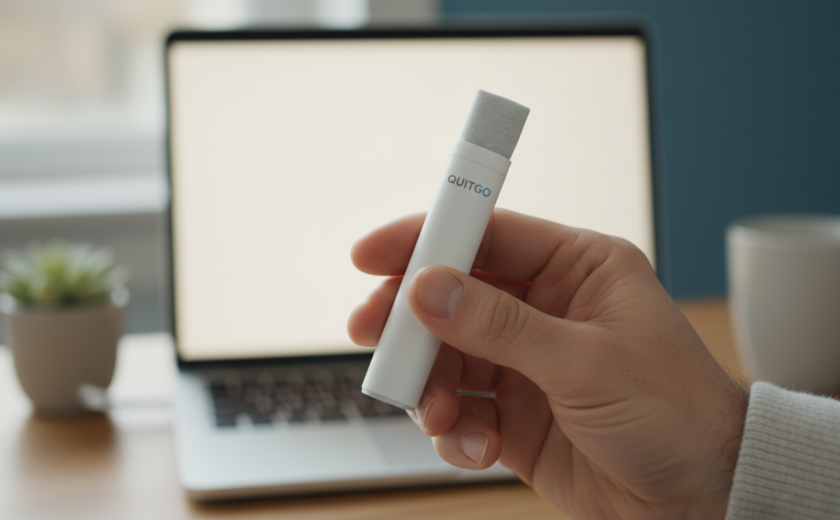
When comparing a standard e-cigarette to a QuitGo Oxygen Inhaler, the primary difference lies in the chemical dependency. Vaping perpetuates the addiction; the Oxygen Inhaler breaks it by utilizing sensory replacement without the toxins.
Managing Hand-to-Mouth Fixation Safely
Fumbling with vape juice or batteries while driving is dangerous. The Oxygen Inhaler requires no charging or refilling. It mimics the physical sensation of holding a vape pen, satisfying the hand-to-mouth ritual that distracts so many drivers. By taking a deep drag from the non-electric inhaler, you engage in deep breathing, which naturally calms the nervous system during traffic jams.
Case Study: Mark’s Commuter Strategy
Mark, a 34-year-old sales rep, spent two hours a day in his car. “The second I hit gridlock, my hand went for the vape automatically,” he recalls. “It wasn’t even about the nicotine anymore; it was about the boredom.”
Mark replaced his vape with a QuitGo Oxygen Inhaler stashed in his cup holder. Whenever he hit a red light, instead of vaporizing nicotine, he used the inhaler to practice deep breathing. By the end of the second week, he had dissociated the car environment from nicotine intake entirely, proving that CBT (Cognitive Behavioral Therapy) techniques combined with the right tool can rewire the brain.
The Science of Craving Duration
It is crucial to remember a key physiological fact: the average craving lasts 3 to 5 minutes. If you can bridge that gap without introducing nicotine, the urge subsides. The Oxygen Inhaler serves as that bridge, providing immediate physical relief during those critical minutes on the road.
Why Choose Nicotine-Free?
- No Withdrawal Loops: Nicotine creates a cycle of relief and withdrawal. A nicotine-free approach stops the cycle.
- Better Focus: Stimulants like nicotine can increase anxiety in high-stress traffic. Deep breathing promotes focus.
- Legal & Safe: No smoke, no vapor, and no distracted driving concerns.
If you are ready to reclaim your drive and stop vaping, consider swapping your device for a natural alternative.
>> Shop the QuitGo Oxygen Inhaler for a Stress-Free CommuteMedical Disclaimer: The information presented here is for educational purposes only and does not constitute medical advice. QuitGo products are not intended to diagnose, treat, cure, or prevent any disease. Always consult with a healthcare professional before starting any new cessation program. QuitGo products are not FDA-approved medical devices.