

For long-term smokers, stress and cigarettes are often inextricably linked. After decades of smoking, your brain has likely rewired itself to view nicotine as the primary coping mechanism for anxiety, pressure, or even minor daily irritations. When you try to quit, stress is often the number one trigger that leads to a relapse.
However, behavioral science suggests that it isn't just the chemical hit of nicotine that provides relief—it is the ritual. The deep breath, the hand-to-mouth motion, and the oral sensation all play a massive role in calming the nervous system. This is where habit replacement becomes critical.
Here is how you can use the QUITGO Soft-Tip Inhaler to navigate high-stress moments without relapsing into nicotine dependence.
Understanding the Stress-Smoking Connection
When a smoker encounters stress, the immediate reaction is to reach for a cigarette. For someone who has smoked for 20+ years, this is an automatic reflex. The problem with using nicotine for stress relief is that nicotine is a stimulant. While it may provide a fleeting moment of dopamine, it actually increases your heart rate and blood pressure, physically mimicking the symptoms of anxiety.
The real relaxation often comes from the Deep Breath you take while inhaling and the satisfaction of the Oral Fixation. By replicating these physical actions without the stimulant, you can trick your brain into calming down without feeding the addiction.
The Role of the Soft-Tip Inhaler
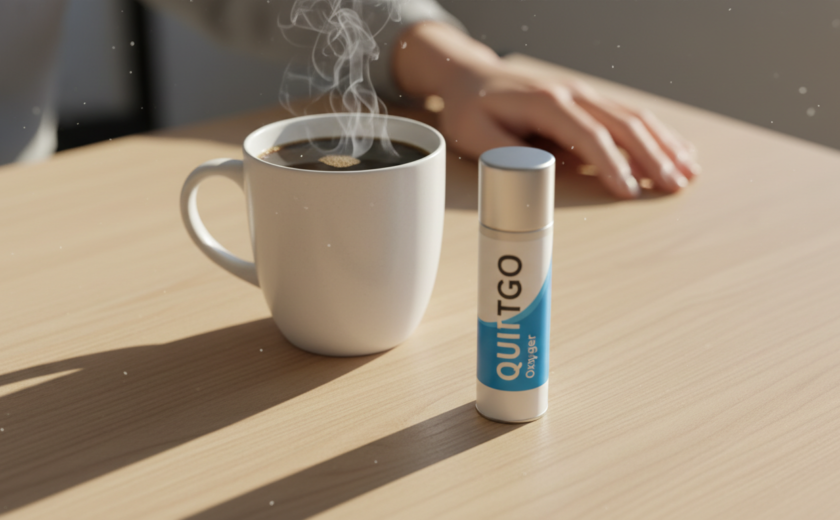
The QUITGO Soft-Tip Inhaler is engineered specifically for this behavioral loop. Unlike hard plastic alternatives, the soft tip is chewable. This is crucial for high-stress moments. The act of chewing or biting down on the tip can help alleviate tension in the jaw and satisfy the intense urge to have something in your mouth.
Key Features for Stress Management:
- Chewable Mouthgrip: Safe to bite on during intense cravings or angry outbursts.
- Airflow Resistance: Mimics the draw of a cigarette, allowing for deep, rhythmic breathing exercises.
- 100% Non-Electric & Drug-Free: No batteries to charge and no chemicals entering your system.
How to Use the Inhaler During a Stress Spike
When you feel your stress levels rising and the crave wave hitting, follow this routine instead of lighting up:
1. The “Pause and Grab”
As soon as the trigger hits (a difficult email, traffic, an argument), pause. Acknowledge the stress. Immediately grab your QUITGO inhaler. Keeping it in your pocket or on your desk is vital for this step.
2. Engage the Jaw
Place the soft tip between your lips or teeth. If you are feeling frustrated, gently chew on the tip. This tactile sensation provides a focal point for your anxiety, redirecting that energy away from the craving.
3. The Deep Draw
Inhale deeply through the inhaler. Hold the breath for 3 seconds. Exhale slowly. This mimics the breathing pattern of smoking, which is scientifically proven to lower cortisol levels, but does so with clean air rather than toxic smoke.
4. Repeat Until Calm
Repeat the breathing cycle 5 to 10 times. Usually, the acute phase of a craving lasts only 3 to 5 minutes. The inhaler bridges this gap.
Why Nicotine-Free is Better for Anxiety
Many long-term smokers fear they cannot handle life's problems without nicotine. In reality, nicotine withdrawal causes anxiety. By using a natural alternative like the QUITGO Quit Kit, you break the chemical cycle. Over time, you will find that your baseline stress levels drop because you are no longer in a constant state of withdrawal between cigarettes.
Summary
Replacing the bad habit with a harmless one allows you to keep your coping mechanism while discarding the deadly chemicals. The Soft-Tip Inhaler is more than a plastic tube; it is a psychological shield against the stress triggers that have controlled your life for too long.
Medical Disclaimer: The information provided in this article is for educational purposes only and does not constitute medical advice, diagnosis, or treatment. QUITGO products are not FDA-approved medical devices or drugs and are not intended to treat, cure, or prevent any disease. Always consult with a healthcare professional before starting any smoking cessation program.